Make the lock public without giving away the key.
We take it for granted nowadays, but the internet is one of the most impactful inventions of modern times – possibly even of all time. But how did it all start? The story of the internet is a fascinating journey through the minds of visionary thinkers and relentless innovators, many of them coming from mathematics and computer science. In this 12-part series, we will dive into some of the stories and contributions of the trailblazers who laid the foundations for the interconnected world we live in today.
Previously, we looked at the rebels who brought encryption out of the shadows. Whitfield Diffie and Martin Hellman showed that two people could establish a shared secret over an insecure channel. It was a revolutionary idea, but it was not the end of the story. The internet still needed a way for anyone to send a secret message to anyone else without first agreeing on a shared secret. It needed a way to sign digital documents and prove identity; a lock that could be made public without giving away the key. That lock was RSA.
Find out more at the HLFF Blog in the newest installment of our 12-part series on the history of the internet: The Internet Chronicles – Part 9 of 12: RSA and Prime Numbers
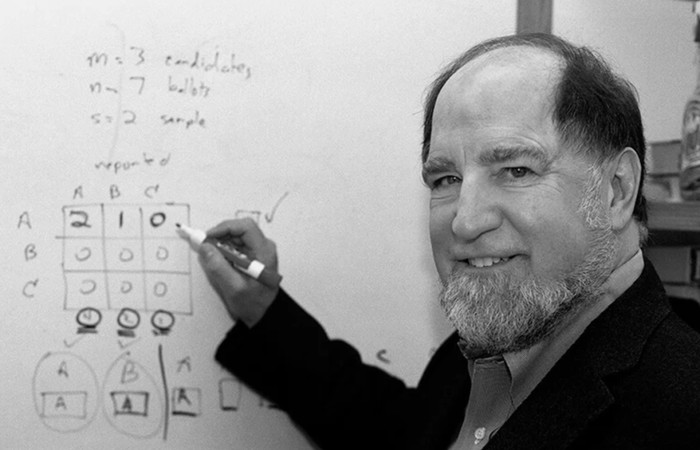
Image caption: Ronald (Ron) Linn Rivest (ACM A.M. Turing Award – 2002); one of three, including Adi Shamir, and Leonard Adleman, to create RSA encryption. Their last name initials make up the "RSA." Image credits: HLFF/Badge.